No More Perfect Victims: Solidarity and Incarcerated Sex Workers
 Dec, 3 2025
She was arrested for soliciting in a parking lot near the bus station. No one saw her cry. No one asked why she was there. The court called her a ‘public nuisance.’ The media called her a ‘victim of circumstance.’ But no one called her human. Not really. Not until she spoke up from behind bars.
Every year, thousands of sex workers are locked up-not because they hurt anyone, but because their survival was labeled a crime. In jails across the U.S., Canada, Australia, and beyond, incarcerated sex workers are erased from public conversation. They’re treated as statistics, not people. Some are mothers. Some are survivors of trafficking. Others chose this work because rent was due, and no other job would take them. And yes, some of them have been lured by promises of luxury-like the ads for happy ending spa dubai that promise easy money, only to trap women in debt and control. These stories aren’t isolated. They’re systemic.
Who Gets to Be a ‘Good’ Victim?
The criminal justice system has a favorite kind of victim: innocent, quiet, and blameless. The woman who was kidnapped. The child forced into prostitution. The woman who ‘never chose this.’ She gets sympathy. She gets headlines. She gets pity. But the woman who walks into a motel room because she needs cash for her kid’s medicine? She’s a ‘bad’ victim. A ‘choice’ victim. A criminal.
This double standard isn’t accidental. It’s designed to protect the illusion that sex work is always exploitation-and never labor. It lets society pretend we’re fighting trafficking when we’re really punishing poverty. We don’t arrest the men who pay. We don’t shut down the websites that advertise. We arrest the person on the other end of the transaction-the one with no safety net.
The Jailhouse Economy
Inside prison, sex work doesn’t disappear. It just goes underground. Women trade sex for protection, food, tampons, or a warm bed. They’re not ‘prostituting themselves’-they’re surviving a system that denies them basic rights. Prison staff turn a blind eye because they can’t-or won’t-deal with the reality: incarceration doesn’t stop sex work. It just makes it more dangerous.
And when these women get out? They’re branded for life. A criminal record means no housing, no jobs, no childcare. Many return to the same streets because there’s nowhere else to go. The cycle isn’t broken. It’s reinforced.
Solidarity Isn’t a Buzzword
Real solidarity means listening to sex workers-not speaking for them. It means funding peer-led organizations that offer housing, legal aid, and mental health support. It means decriminalizing sex work, not ‘rescuing’ people from it. In New Zealand, where sex work was decriminalized in 2003, violence against sex workers dropped by 40%. Arrests for solicitation fell by 80%. And yet, we still treat this as a moral issue instead of a public health one.
Organizations like SWOP (Sex Workers Outreach Project) and the Global Network of Sex Work Projects have spent decades proving that safety comes from rights, not raids. But policymakers keep ignoring them. Why? Because the narrative of the ‘perfect victim’ is easier to sell than the messy truth: people need money. People need dignity. And sometimes, sex work is the only option.
When the System Calls It ‘Consent’
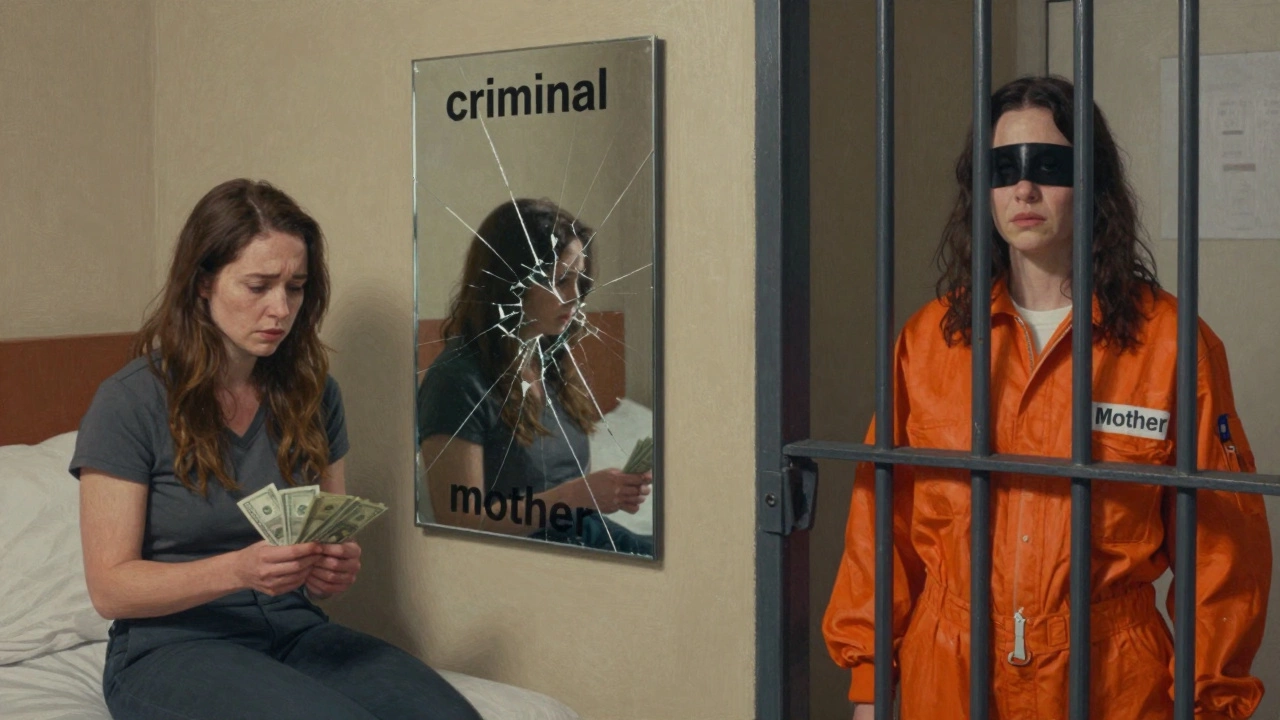
Here’s a truth no one wants to admit: consent doesn’t disappear behind bars. But it’s not the kind you see in movies. It’s the quiet ‘yes’ you give when saying no means going without food for three days. It’s the nod you give when your cellmate offers to guard your belongings in exchange for intimacy. That’s not romance. It’s survival.
And yet, when a woman in prison says she ‘chose’ to exchange sex for safety, the system calls it coercion. When a woman outside says she ‘chose’ to do erotic massage dubai marina to pay for her daughter’s asthma inhaler, the system calls it crime. The difference isn’t in the act. It’s in the power.
The Myth of the ‘Bad Industry’
People talk about the ‘dangers’ of sex work like it’s a uniquely evil industry. But let’s be honest: every low-wage job has its risks. Warehouse workers get injured. Nurses get assaulted. Waitresses get groped. Yet we don’t lock them up. We don’t call them ‘immoral.’ We call them workers.
Why is sex work different? Because it’s tied to sex. And society still believes sex is something to be controlled, hidden, and punished-especially when women are involved. The real danger isn’t the work. It’s the stigma. It’s the laws. It’s the silence.
Meanwhile, the industry keeps evolving. Online platforms, apps, and private bookings have made it safer for many. But without legal protection, those who can’t access tech-older women, undocumented migrants, disabled workers-are left behind. And they’re the ones getting arrested.
What Does Justice Look Like?
Justice isn’t more prisons. It’s not more ‘rescue missions.’ It’s not even more awareness campaigns.
Justice is:
- Decriminalizing all forms of consensual adult sex work
- Expunging criminal records for solicitation and related charges
- Funding peer-run support networks, not police task forces
- Providing housing, healthcare, and job training without conditions
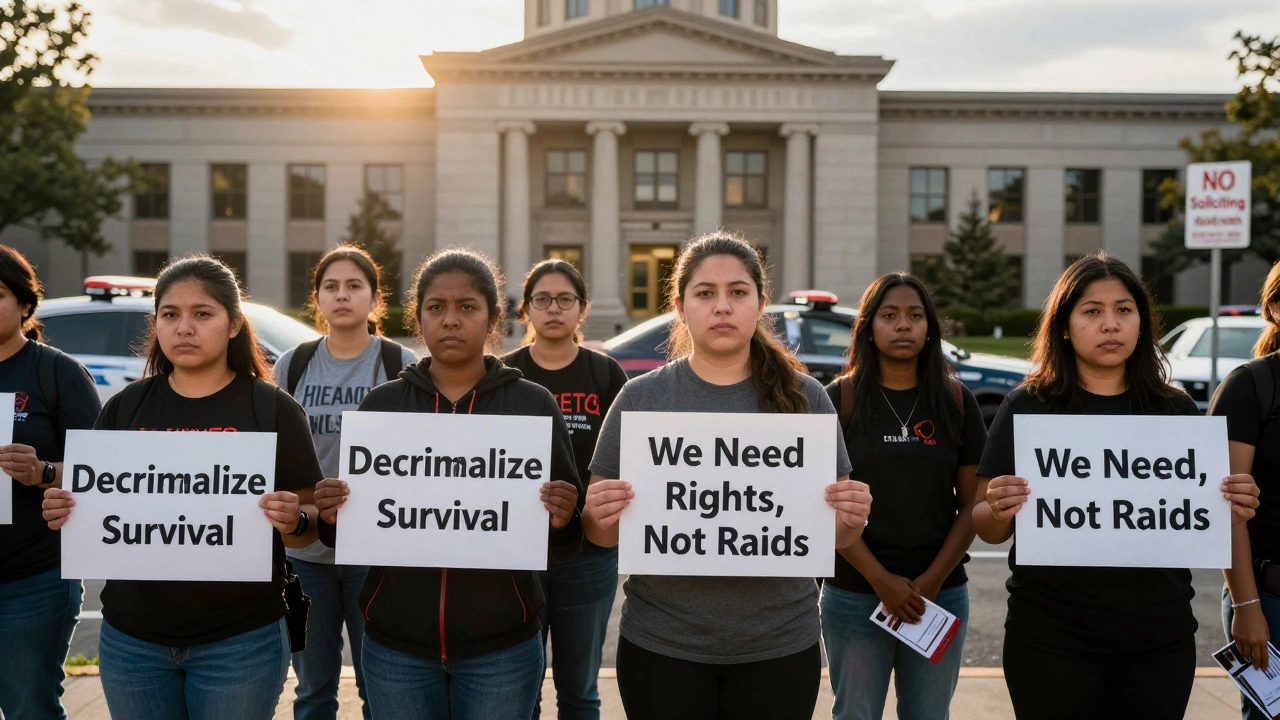
- Listening to sex workers when they say: ‘We don’t need saving. We need rights.’
In Canada, the 2014 ‘Nordic model’-which criminalizes buyers but not sellers-was sold as ‘progress.’ But arrests of sex workers didn’t drop. They just moved to more dangerous locations. In Sweden, where the same model was adopted, sex workers reported higher rates of violence and less access to police help. Why? Because they’re afraid to report anything if they think they’ll be arrested next.
There’s a reason the UN Human Rights Council, Amnesty International, and the World Health Organization all support decriminalization. Not because they support sex work. Because they support human rights.
They’re Not Just Victims. They’re People.
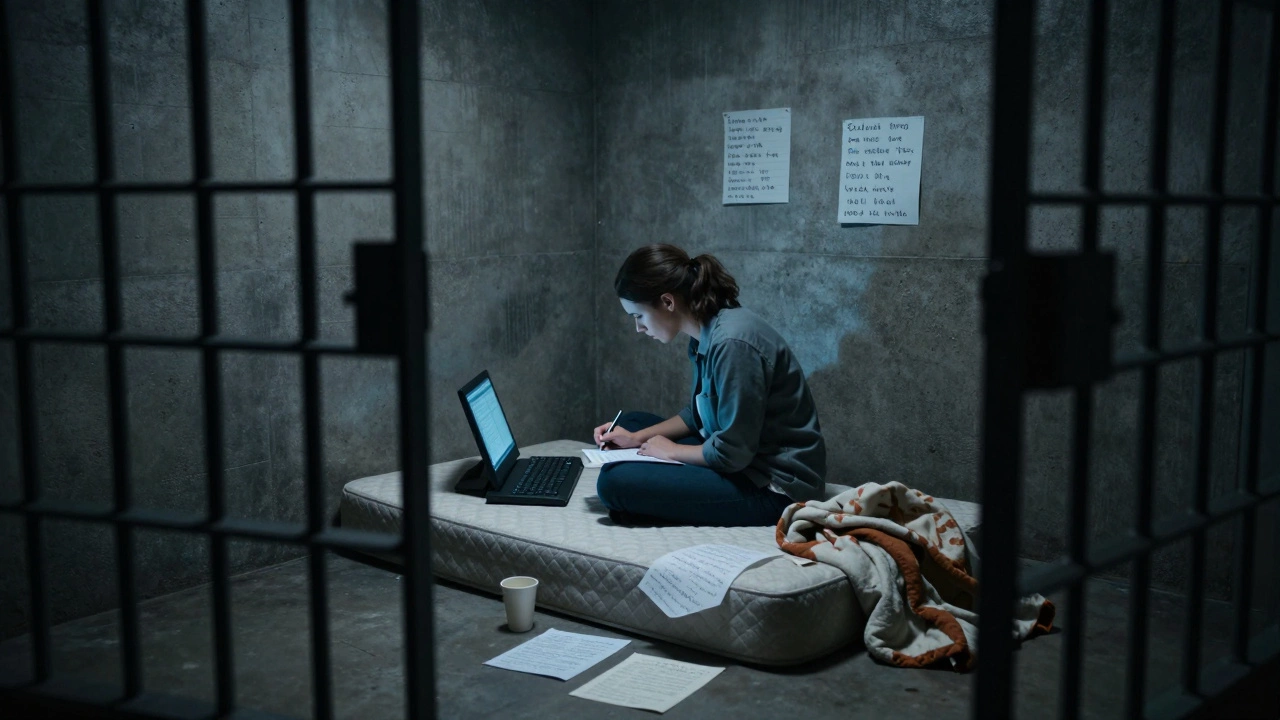
One woman I spoke to-let’s call her Maria-was arrested five times in three years. Each time, she was charged with solicitation. Each time, she got 30 days. She never got a lawyer. She never got counseling. She got a paper cup of coffee and a blanket that smelled like bleach.
After her fifth release, she started a newsletter for other incarcerated sex workers. She typed it on a library computer, using stolen time. She wrote about how to get birth control in jail. How to find a lawyer who won’t judge you. How to survive the first week out without being homeless.
She didn’t ask for pity. She asked for change.
And now, when you hear the phrase ‘perfect victim,’ remember Maria. Remember the woman who did massage erotic dubai to pay for her mother’s dialysis. Remember the ones who never made it out. Remember that dignity isn’t earned by being innocent. It’s a right.
The system doesn’t need more victims. It needs more justice.